
Tetris
![Tetris - Japanese Logo - Katakana / Kanji]()

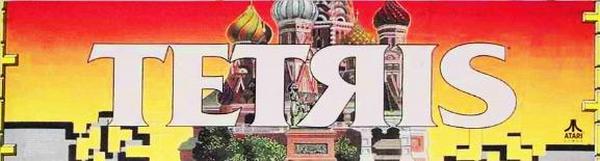
Description
A puzzle game where seven different types of blocks continuously fall from above and you must arrange them to make horizontal rows of bricks. Completing any row causes those blocks to disappear and the rest above move downwards completing four rows at once is called a Tetris. The blocks above gradually fall faster and the game is over when the screen fills up and blocks can no longer fall from the top.
Tetris was produced by Atari Games in 1988.
Atari Games released 88 machines in our database under this trade name, starting in 1984. Atari Games was based in United States.
Other machines made by Atari Games during the time period Tetris was produced include: Xybots, A.P.B., Atari R.B.I. Baseball, Blasteroids, RBI Baseball, Cyberball, Vindicators, Toobin', Vindicators Part II, and Assault
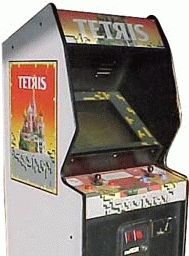
Specs
| Name | Tetris |
|---|---|
| Developer | Atari Games (United States) |
| Year | 1988 |
| Type | Videogame |
| KLOV/MOG # | 10081 |
| Class | Wide Release |
| Genre | Puzzle |
| Monitor |
|
| Conversion Class | JAMMA |
| Game Specific | Tetris Pinout |
| Dipswitch Settings | |
| # Simultaneous Players | 2 |
| # Maximum Players | 2 |
| Game Play | Competitive |
| Control Panel Layout | Multiple Player Ambidextrous |
| Controls |
|
| Sound | Amplified Mono (one channel) |
| Cabinet Styles |
|
| Instructions | Tetris Instructions Image |
| Bezel | Tetris Bezel Image |
| Control Panel | Tetris Control Panel Image |
| Side Art | Tetris Side Art Image |
| PCB | Tetris PCB Image |
Video Clips
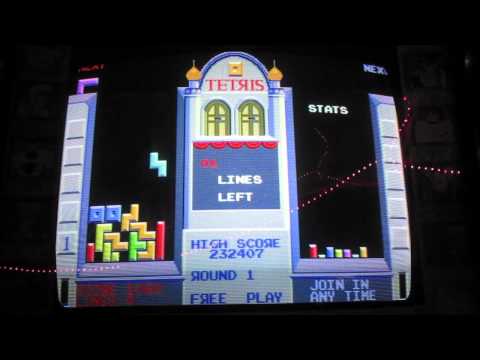

Game Introduction
You must arrange bricks to form rows without the 'wall' getting too high, or it's game over. You can rotate bricks so that they fit into the wall and once a row is complete it will disappear, thus lowering the wall. Eliminated rows will lower the number of lines you need to complete a level. Bricks fall faster in the higher levels and sometimes there are already bricks in the field that block your path. Often, when you try to make a Tetris four rows of lines that are removed at once, you end up waiting a long time for the long red brick the only way of completing a Tetris. It is interesting to note that every brick is made up of exactly four blocks.
Tetris KLOV/IAM 5 Point User Score: 3.58 (8 votes)
Fun Factor: 4.06
Overall Like |
4.43 |
|---|---|
| Fun (Social) | 3.86 |
| Fun (Solo) | 4.29 |
| Collector Desire | 3.29 |
Technical Rating: 3.50
| Gameplay | 4.57 |
|---|---|
| Graphics | 3.14 |
| Originality | 3.63 |
| Sound/Music | 3.14 |
Personal Impressions and Technical Impressions each account for half of the total score.
Within the Personal Impressions category, Like
carries a little more weight than the other factors.
Log in to rate this game!
Cheats, Tricks, Bugs, and Easter Eggs
If you tap the "rotate" buttons when the guy in the doorway is doing his "victory dance" a hook will reach out from the side and drag him away by the neck. If you do it when he is just dropping down to do the "Cossack Kicks", he'll dodge the hook the first time, but get caught by it on the return!
More pictures
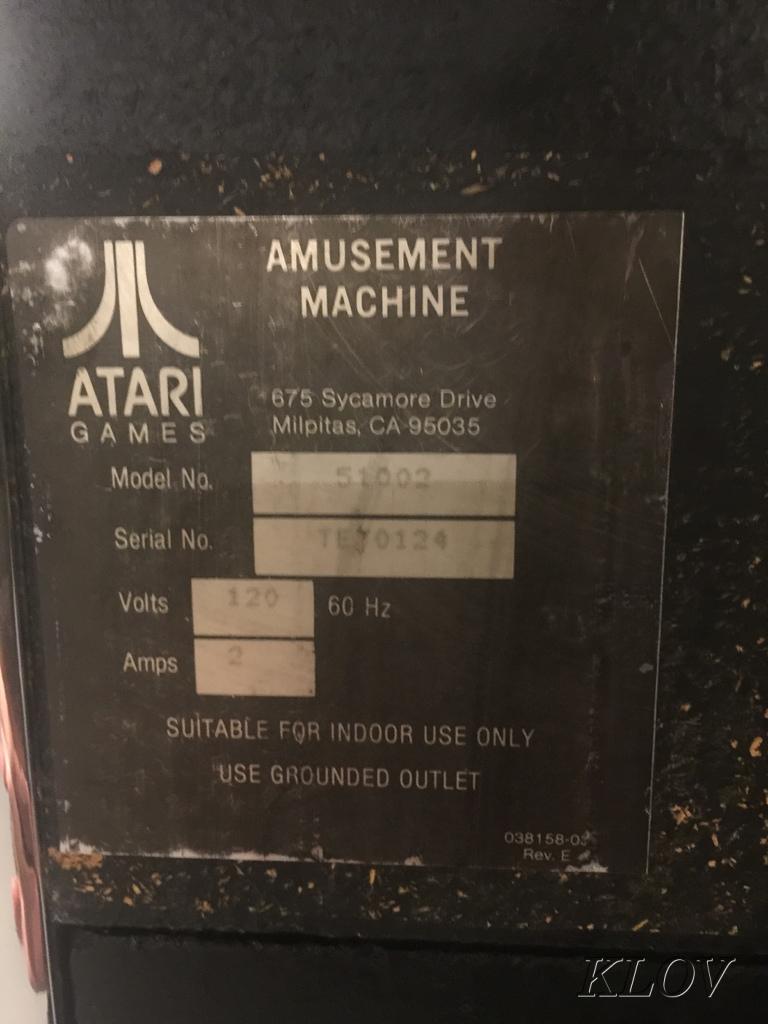
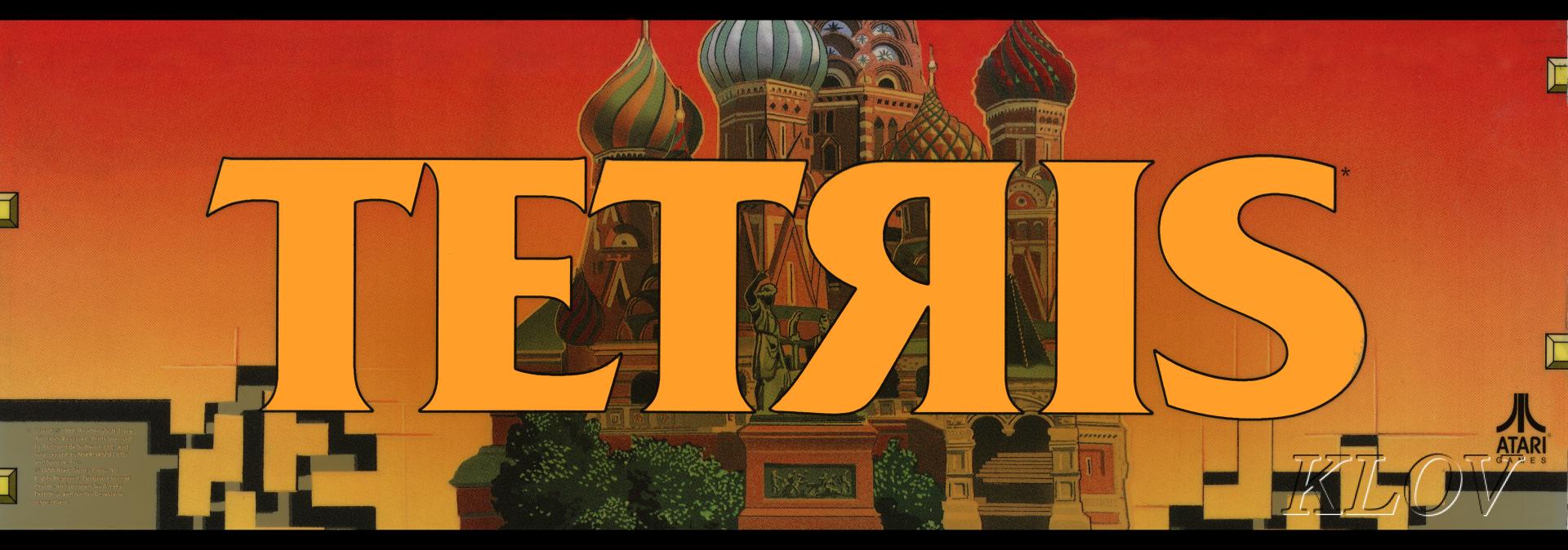
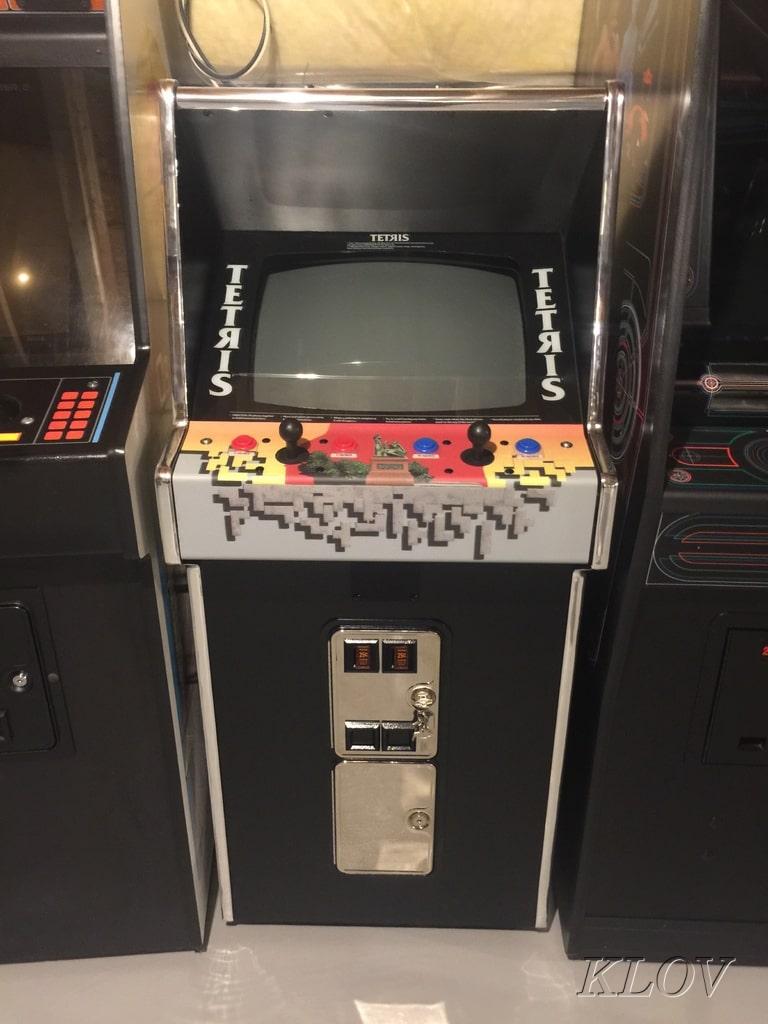
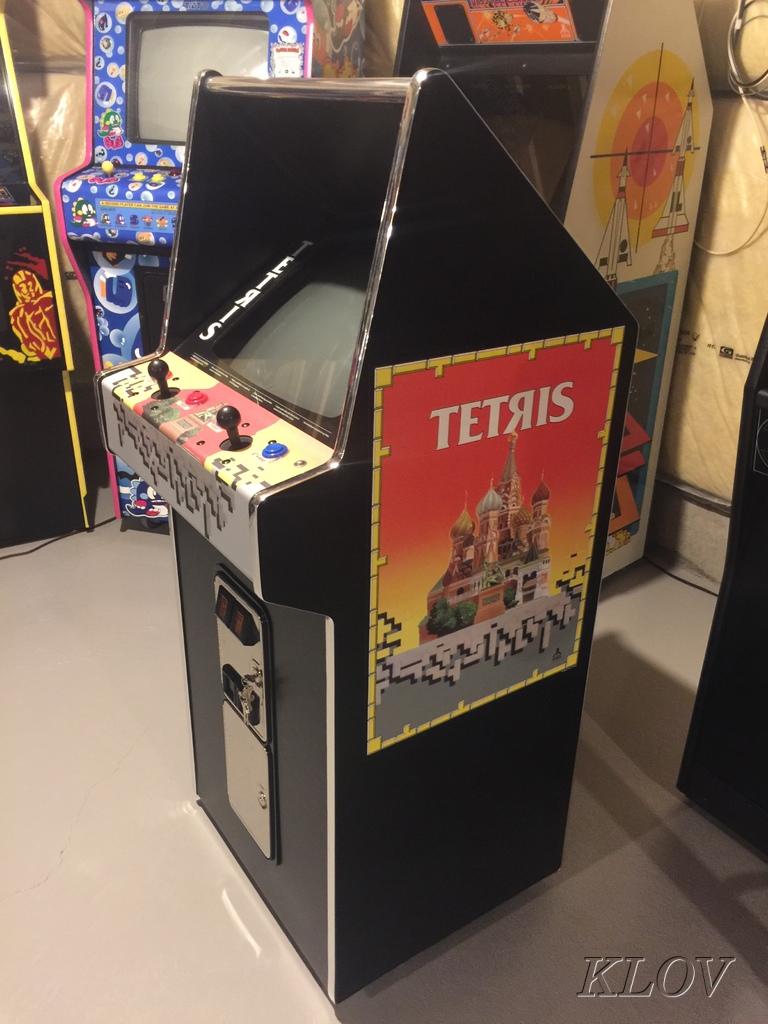
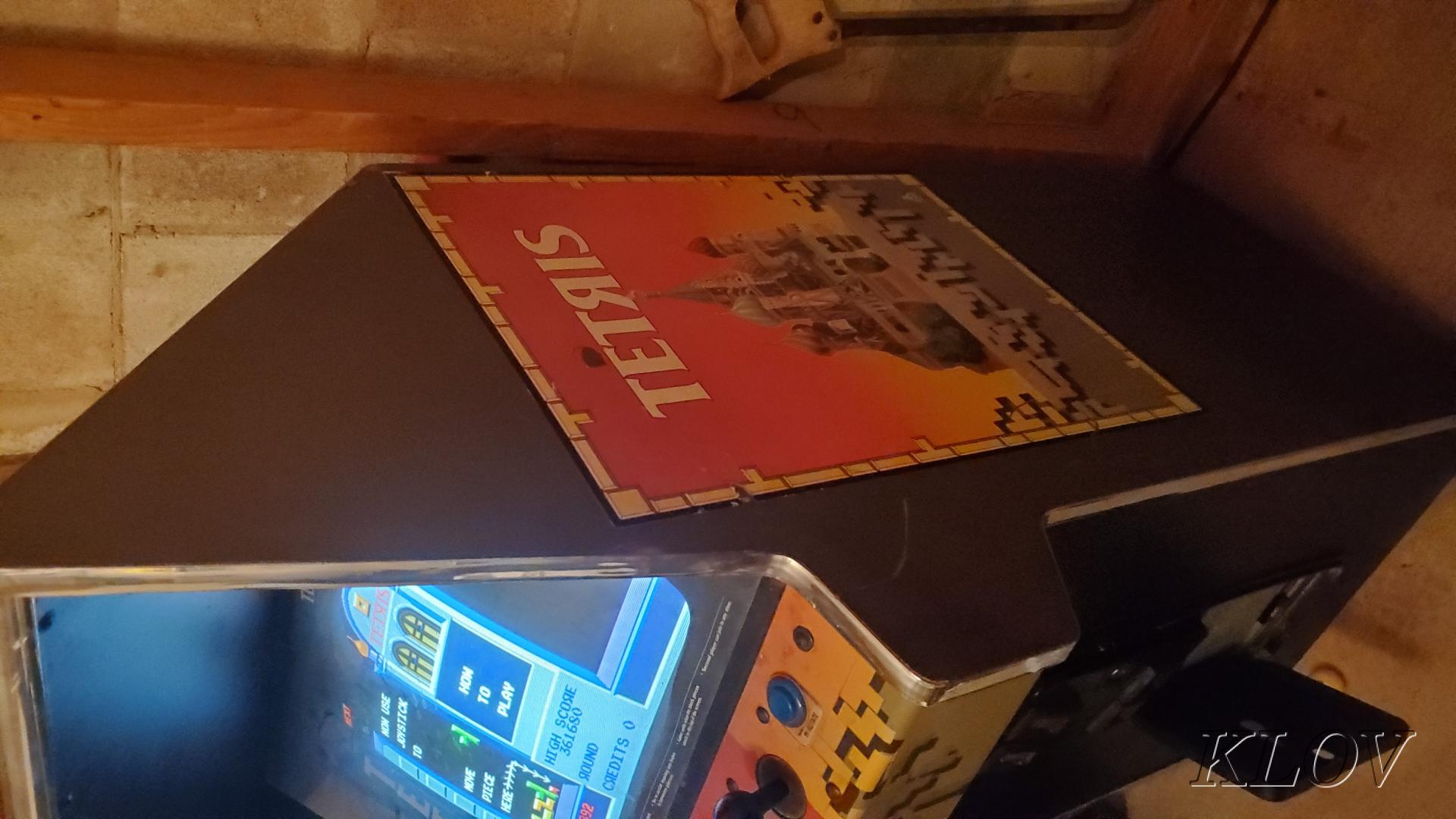
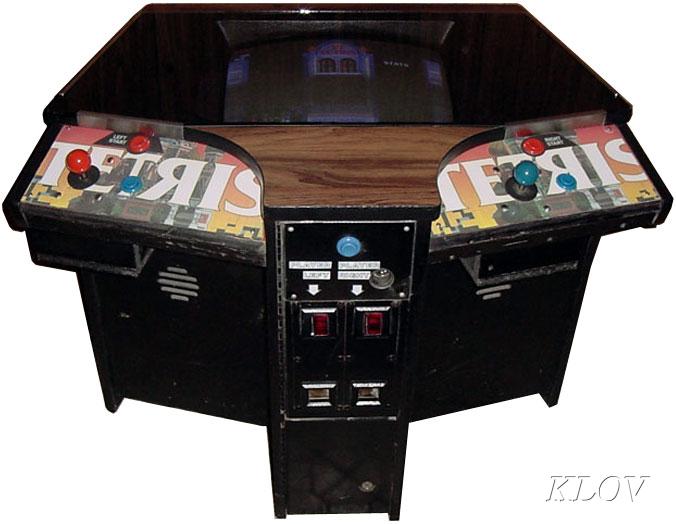
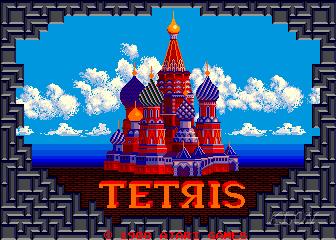
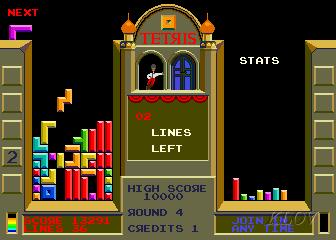
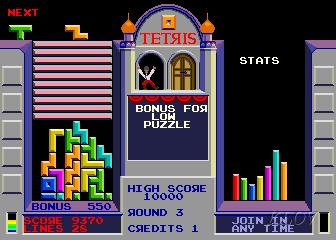
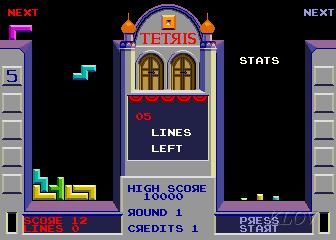
Trivia
The original designer is a Russian programmer called Alexey Pazhitnov, which is why the artwork has Russian buildings and dancers.
Gilman Louie was the first one to license Tetris from its developers in the Soviet Union.
VAPS Arcade/Coin-Op Tetris Census
There are 14,774 members of the Video Arcade Preservation Society / Vintage Arcade Preservation Society, 9,482 whom participate in our arcade census project of games owned, wanted, or for sale. Census data currently includes 164,618 machines (6,906 unique titles).
Very Common - There are 409 known instances of this machine owned by Tetris collectors who are active members. Of these, 84 of them are original dedicated machines. 99 of them are conversions in which game circuit boards (and possibly cabinet graphics) have been placed in (and on) another game cabinet. 224 of them are only circuit boards which a collector could put into a generic case if desired.
For Sale - There are 13 active VAPS members with a Tetris machines for sale. There are 14 active VAPS members with a Tetris circuit boards for sale.
Wanted - Popular - There are 23 active VAPS members currently looking for Tetris. There are 4 active VAPS members looking for Tetris boards sets.
This game ranks a 82 on a scale out of 100 (100 = most often seen, 1=least common) in popularity based on census ownership records.
This game ranks a 32 on a scale out of 100 (100 = most often seen, 1=least common) in popularity based on census want list records.
Rarity and Popularity independently are not necessarily indications of value. [More Information]
Flyers

 1988
1988

 1988
1988
Technical
The game uses a 6502 microprocessor and two Atari Pokey sound chips. Game settings and the top six high scores are saved in EEROM Electrically Erasable ROM. The game only uses font-mapped graphics there are no sprite graphics.
Manuals


Additional References (logged in members often see more)
See the game at:
This game is available at the following public arcades, bars or museums:
| Name | Location | State | Country | Details | Check-ins |
|---|---|---|---|---|---|
| 8-Bit Beans | 100 Brock St South, Whitby | Ontario | Canada | 0 | |
| Bartari | 101 Adams Ave, Scranton | Pennsylvania | United States |
Arcade Bar (Classic Videogame and Pinball) Children: Only in daytime Focus: Classic & Modern Games Food: Yes Alcohol: Yes Payment Method: Coins |
0 |
eBay Listings
Click to search eBay for Tetris Videogame machines and related items.
Click to search eBay for Atari Games for machines and parts.
When you click on links below to various merchants on this site and make a purchase, this can result in this site earning a commission. Such revenue helps to fund this site's operations. Affiliate programs and affiliations include, but are not limited to, the eBay Partner Network.
TOP WATCHED LISTINGS FOR: Tetris


Tetris Tiny Arcade Super Impulse New FREE SHIPPING
Auction ends in: 6 days, 18 hours

Authentic Atari Tetris Arcade PCB and Original Marquee - JAMMA
Auction ends in: 4 weeks, 14 hours

Tetris Atari Arcade Marquee For Header/Backlit Sign
Auction ends in: 4 weeks, 1 day

Tetris Arcade Side Art and Bezel Sticker - Sticky Backed Vinyl
Auction ends in: 1 week, 2 days

TETRIS Nano Handheld Electronic GAME Clip-on Carabiner Basic Fun 80's. NOS
Auction ends in: 1 week, 3 days

Tetris Arcade Control Panel Overlay 25.5” X 17.75” (cpo)
Auction ends in: 3 weeks, 21 hours

TETRIS - MEGATOUCH NEW Add-On Game Update - Download Upgrade for Ion 2014
Auction ends in: 3 weeks, 23 hours

Tetris Video Arcade Game Avoid Leaving Holes Decal Sticker Original 1988
Auction ends in: 3 weeks, 5 days

TETRIS ARCADE MACHINE by ATARI 1988 (Great Condition) *RARE*
Auction ends in: 2 days, 5 hours
Auction Results
Logged in members can see all related auctions.
Auctions Recap
| Year | Count | Median $ | Average $ |
|---|---|---|---|
| 2015 | 1 | 345.00 | 345.00 |
| 2016 | 1 | 230.00 | 230.00 |
| 2018 | 1 | 531.00 | 531.00 |
| All Years | 3 | 345.00 | 368.67 |
Contribute
- Log in to contribute content to this page
- Please consider donating to the International Arcade Museum Library